
• Skip to main content
  • Skip to secondary menu
  • Skip to primary sidebar
  • Skip to footer
  • Home
  • About Us
  • Contact Us

Nature Around Me

Nature is all around us - We just need to know where to look....

Ad example
  • Contents
    • About Us
      • Contact us
        • Nature website creation tools
          • Privacy
            • Cookie Policy (UK)
  • wildlife
    • Birds
    • Fish
    • Insects
    • Mammals
  • Projects
  • Plants
  • Surveys
  • News
    • News in brief
  • Reviews
    • Webwatch
You are here: Home / Featured / Book review: Dormice

Book review: Dormice

November 8, 2011 by admin Leave a Comment

The life of a dormouse is explained in easy to understand text

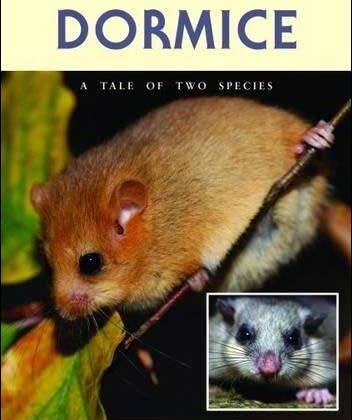
Dormice by Pat Morris is one of the latest in the British Natural History publications from Whittet Books.

This second edition publication gives a fascinating insight into our much loved native hazel dormouse and its very much less popular cousin, the edible dormouse.
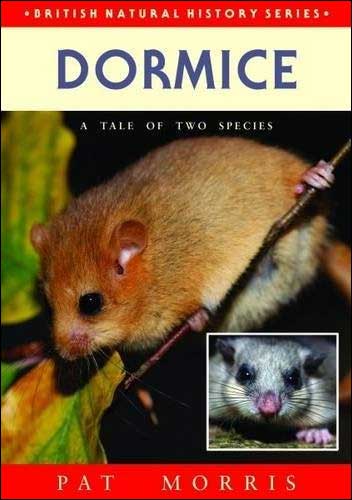
The life of a dormouse is explained in easy to understand text

The author, Dr Pat Morris was the senior lecturer in zoology at Royal Holoway, University of London with over 50 years of research into various mammals including hedgehogs.

Right from the opening page this book is packed with masterful black and white illustrations by Guy Troughton.

Hazel and edible dormouse

Britain has two kinds of dormouse according to the author, and in this book he treats them as very separate creatures.

The native British dormouse often occurs among the hazel, hence being called the hazel dormouse. Often kept as pets by Victorian children it has become quite rare and little was known about it until recently.

At the other end of the cute scale is the edible dormouse is the thug of the forest which Mr Morris describes as  “Big. noisy, bad tempered and bites like hell.”

Once the introductions are complete, this easy to read and fascinating book explains all about the dormouse history, its lifecycle, feeding habbits and how to identify one from another.

An easy read

After only a few pages we found ourselves recounting facts and curiosities across the dinner table as we became familiar with a creature we possibly will never see.

This is one of those books that is a pleasure to read as a coffee table book or as the basis for a college or educational project.

Stuffed full of facts and observations we could easily see this book being used as source material for pub quizzes and natural history treasure trails.

Our estimated reading age would be around 12+. However, this paperback book is ideal for all ages and could even be used as a bedtime read for younger children interested in natural history.

Edible dormouse

Buzzing around in our heads as we read through the 144 page book was the question of how the edible dormouse got it’s name and could you eat it.

It seems that, according to page 98, in many countries in southern Europe the, ‘Spanish Rat’ as it was often called, did appear on menus.

During Roman times Mr Morris explains that the edible dormouse was actually bred for eating. However, no evidence seems to indicate this was done during the Roman occupation of Britain.

Special containers were used to help fatten up the mice which were ‘self basting’ when cooked. Yummy.

Further information

This fascinating and compelling book is available from Amazon , Whittet Books  other major book suppliers.

It has a recommended price of £9.99 and would be ideal as a gift or Christmas stocking filler.

Filed Under: Featured, Reviews Tagged With: British Natural History, Coffee Table Book, Cousin, Creatures, Curiosities, Dinner Table, Dormice, Dormouse, Edition Publication, Educational Project, Habbits, Illustrations, Insight, Introductions, Mammals, Natural History Publications, Natural History Series, Pat Morris, Pub Quizzes, Reading Age, Royal Holoway University, Senior Lecturer, Text Caption, Thug, Treasure Trails, Two Kinds, University Of London, Victorian Children, Whittet Books, Zoology

Reader Interactions

Leave a Reply

You must be logged in to post a comment.

Primary Sidebar

More to See

UK Peatland Restoration Programme

October 26, 2013 By admin

Nectarworks Bumblebee Project

April 8, 2013 By admin

Tags

Amp Sound Apple Menu Bbc Birds Caption Conservationists Dales National Park Desktop Area Desktop Wallpaper File Jpg forestry commission Garden Birds Habitats Hectares hedgerows Heritage Lottery Fund Internet Explorer Users lake district Mammals Mark Avery Moors National Park Mouse Button Nature Reserve Netscape Users North York Moors North York Moors National Park Pop Up Menu Red Squirrel Rspb Rspb Images Select Control Select Properties Settings Tab Sightings South Cumbria survey Time Users Volunteers Wallpaper Option Wallpaper Windows Wildlife Trust Woodland Trust Yorkshire Dales Yorkshire Dales National Park Yorkshire Dales National Park Authority

Footer

Get in touch

Please use our contact us form to get in touch with your news, questions or product review submissions.

Recent

  • Hedgehogs by Pat Morris
  • UK Peatland Restoration Programme
  • Nectarworks Bumblebee Project
  • Great white egret nests in Somerset, UK
  • Exmoor ponies travel to South Downs reserve

Search

Tags

Amp Sound Apple Menu Bbc Birds Caption Conservationists Dales National Park Desktop Area Desktop Wallpaper File Jpg forestry commission Garden Birds Habitats Hectares hedgerows Heritage Lottery Fund Internet Explorer Users lake district Mammals Mark Avery Moors National Park Mouse Button Nature Reserve Netscape Users North York Moors North York Moors National Park Pop Up Menu Red Squirrel Rspb Rspb Images Select Control Select Properties Settings Tab Sightings South Cumbria survey Time Users Volunteers Wallpaper Option Wallpaper Windows Wildlife Trust Woodland Trust Yorkshire Dales Yorkshire Dales National Park Yorkshire Dales National Park Authority

Return to top of page

Copyright © 2026 · www.thesportsphysio.com · You may also be interested in Heritage and History · Log in

Manage Cookie Consent
We use cookies to optimize our website and our service.
Functional Always active
The technical storage or access is strictly necessary for the legitimate purpose of enabling the use of a specific service explicitly requested by the subscriber or user, or for the sole purpose of carrying out the transmission of a communication over an electronic communications network.
Preferences
The technical storage or access is necessary for the legitimate purpose of storing preferences that are not requested by the subscriber or user.
Statistics
The technical storage or access that is used exclusively for statistical purposes. The technical storage or access that is used exclusively for anonymous statistical purposes. Without a subpoena, voluntary compliance on the part of your Internet Service Provider, or additional records from a third party, information stored or retrieved for this purpose alone cannot usually be used to identify you.
Marketing
The technical storage or access is required to create user profiles to send advertising, or to track the user on a website or across several websites for similar marketing purposes.
  • Manage options
  • Manage services
  • Manage {vendor_count} vendors
  • Read more about these purposes
View preferences
  • {title}
  • {title}
  • {title}